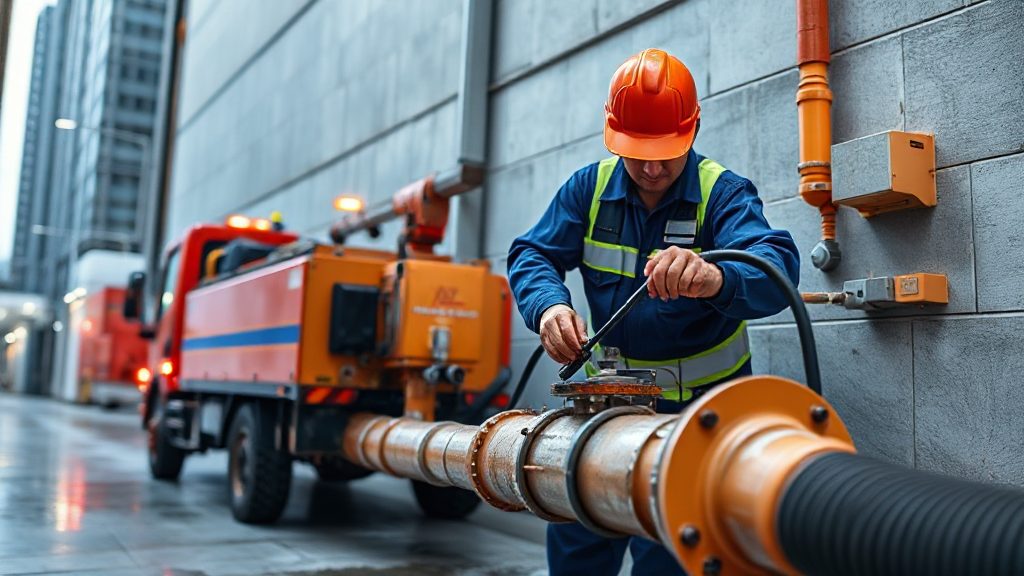
How to Fix a Stubborn Blockage When the Usual Method Fails in Aricanduva
When plunging, hot water and store-bought drain cleaner have all failed, stop repeating them and call a professional desentupidora Aricanduva service for mechanical inspection and hydrojetting. A blockage that survives repeated DIY attempts is usually deeper than the trap, hardened with grease or roots, or caused by a collapsed section of pipe that no chemical can dissolve. The right next step is diagnosis, not another bottle of product.
This advice is written for the cautious client: the homeowner, shop owner or building manager who wants to understand what is happening before authorizing work. Below you will find how to tell a simple clog from a serious one, what a technician actually does when standard tools fail, and how to avoid the mistakes that turn a small obstruction into an emergency.
Diagnosing a Blockage That Will Not Clear
Most drains clear because the obstruction is soft and close to the surface. When that is not the case, the behavior of the drain tells you a lot about where the problem sits. Watch for these signals before you spend more money on remedies.
Signs the problem is deeper than the trap
- Water backs up in more than one fixture at the same time, such as a floor drain and a shower.
- Gurgling sounds come from other drains when you use one.
- The blockage returns within days of apparently clearing.
- Slow drainage affects the whole property, including outdoor areas.
Multiple fixtures backing up together usually means the obstruction is in a shared branch line or the main sewer connection, not in a single sink trap. Recurring clogs in the same spot point to buildup on the pipe walls rather than a single object. That distinction matters because the tools that fix a local clog are not the tools that clean a pipe interior.
When the cause is structural, not just accumulated waste
Old clay and cast-iron lines in established neighborhoods can crack, shift or be invaded by tree roots. If the property is older and the blockage keeps returning after clearing, a camera inspection is the honest way to find out. A technician inserts a camera on a flexible rod and records the inside of the pipe, which shows roots, cracks, grease ridges or a sagging section. Without that image, any repair is a guess.
For residents and businesses in the eastern zone of the city, a desentupidora Aricanduva São Paulo SP team can combine the inspection with the clearing work in one visit, which avoids paying twice for travel and diagnosis.
What not to do while you wait
Do not pour more chemical drain cleaner into a drain that is already holding water. The product sits in the pipe, can damage older joints and is hazardous for the technician who later opens the line. Do not use a plunger on a line you suspect is blocked by roots, because pressure can separate a weakened joint. And do not open a cleanout cap indoors without a bucket and protection, since the trapped water will come out fast.
What a Professional Does Differently
A professional service does not simply push harder. It selects a method based on the pipe diameter, the material and the type of obstruction. This is where the difference between a failed DIY attempt and a resolved problem usually lies.
Mechanical clearing with the right machine
For a blockage caused by roots, hardened grease or a foreign object, a motorized auger or drain snake is used with a cutting head sized to the pipe. The technician feeds the cable until it reaches the obstruction, then rotates it to break up or retrieve the material. The correct cable size and head type prevent damage to the pipe while still removing the cause. A tool that is too small passes the blockage without clearing it; one that is too aggressive can crack a fragile line.
Hydrojetting for buildup on the pipe walls
When the problem is not a single object but a coating of grease, soap residue or scale, high-pressure water is more effective than any cable. A hydrojetting unit sends water at controlled pressure through a nozzle that also pulls itself forward and flushes debris back toward the access point. This restores the full internal diameter of the pipe rather than just punching a hole through the middle. It is the standard method for commercial kitchens and for any line that clogs repeatedly in the same place.
Camera inspection and honest reporting
After clearing, a camera check confirms the line is genuinely open and reveals any defect that will cause the next blockage. A cautious client should ask for this step and for a plain explanation of what the images show. If a repair is needed, you want to know before the next emergency, not during it.
| Method | Best for | Limitation |
|---|---|---|
| Hand plunger | Soft clogs near the fixture | Ineffective beyond the trap |
| Chemical cleaner | Light organic buildup | Can damage old pipes; unsafe for technicians |
| Mechanical auger | Roots, solid objects, deep clogs | Needs correct head size for the pipe |
| Hydrojetting | Grease, scale, recurring buildup | Requires access point and proper pressure control |
| Camera inspection | Diagnosis of structural defects | Diagnostic only; does not clear the line |
Emergency response and what it covers
Sewage backing up into a home or business is a health issue, not just an inconvenience. A 24-hour emergency service exists for exactly this situation, including nights and weekends. When you call, describe what is backing up, how many fixtures are affected and whether there is a cleanout access point. That information lets the team arrive with the right equipment instead of making a second trip.
For property managers coordinating several units, it helps to have a single contact for both emergencies and scheduled preventive maintenance. A desentupidora em Aricanduva São Paulo SP that handles both avoids the common situation where an emergency contractor and a maintenance contractor blame each other for the same recurring problem.
Costs and trade-offs to expect
Pricing depends on access, depth, pipe diameter and method. A simple mechanical clearing costs less than hydrojetting, which in turn costs less than a job that requires excavation. Ask for the scope before work begins: what will be cleared, whether inspection is included, and what happens if the obstruction turns out to be structural. A written estimate protects both sides, and a reputable company will not treat a diagnostic finding as an upsell if the images support it.
Preventing the next failure
Once the line is clear, the goal is to keep it that way. For kitchens, avoid pouring cooking oil down the drain; collect it and dispose of it separately. Use strainers in sinks and showers to catch hair and food particles. For buildings, schedule periodic hydrojetting of main lines before the rainy season, when infiltration adds stress to already burdened pipes. Preventive maintenance is consistently cheaper than emergency repair.
If the property has a septic system rather than a sewer connection, include regular tank inspection and pumping in the plan. A full tank sends solids into the drain field, and that failure is far more expensive than routine emptying.
Frequently asked questions
How do I know if I need a professional or can I keep trying at home?
If one fixture is slow and a plunger helps, home methods are reasonable. If water backs up in several places, returns after clearing, or smells strongly of sewage, stop and call a professional. Repeated chemical use on a serious blockage risks pipe damage and creates a hazard for whoever opens the line later.
Is hydrojetting safe for older pipes?
It can be, but pressure must be matched to the pipe’s condition. That is why a camera inspection first is the cautious approach. A fragile or already cracked line may need repair rather than cleaning, and a good technician will say so rather than proceed and cause a failure.
What information should I have ready when I call?
Know which fixtures are affected, whether there is an accessible cleanout, the approximate age of the building and whether the problem has happened before. Also mention any chemical products already used, so the team can take the right precautions. Clear information shortens the job and reduces cost.
Can a blockage affect my neighbors or the whole building?
Yes. In apartment buildings and row houses, a blockage in a shared branch line can affect several units. If neighbors report the same problem at the same time, the cause is almost certainly in the shared line, and the building’s maintenance contact should coordinate a single inspection rather than each unit hiring separately.
How long does a typical emergency visit take?
Most straightforward clearings are completed within a couple of hours once the team arrives. Jobs involving roots, collapsed sections or difficult access take longer, and the technician should explain the expected duration after the initial assessment. Ask for that estimate before authorizing the work.